THE LISTENING JOURNAL
Tibetan Singing Bowls & Kalimba: A Quiet Listening Practice
Explore Viktoria’s Tibetan singing bowls and kalimba sound bath with a simple listening practice, three moments from the recording, and the full session.
Press play to load YouTube. Watch on YouTube ↗
Listen along: Tibetan singing bowls & kalimba. Pause whenever you like and return to the guide at your own pace.
A sound bath can offer more than one point of focus. In this session from Viktoria’s archive, Tibetan singing bowls share the space with a kalimba. Try following one instrument for a moment, then letting your attention open to the whole recording.
The video was published on 23 March 2026. This new guide revisits that recording with a simple listening practice and three stills taken directly from the session. The full sound bath is approximately 52 minutes, but a few quiet minutes are a good place to begin.
Meet the two instruments
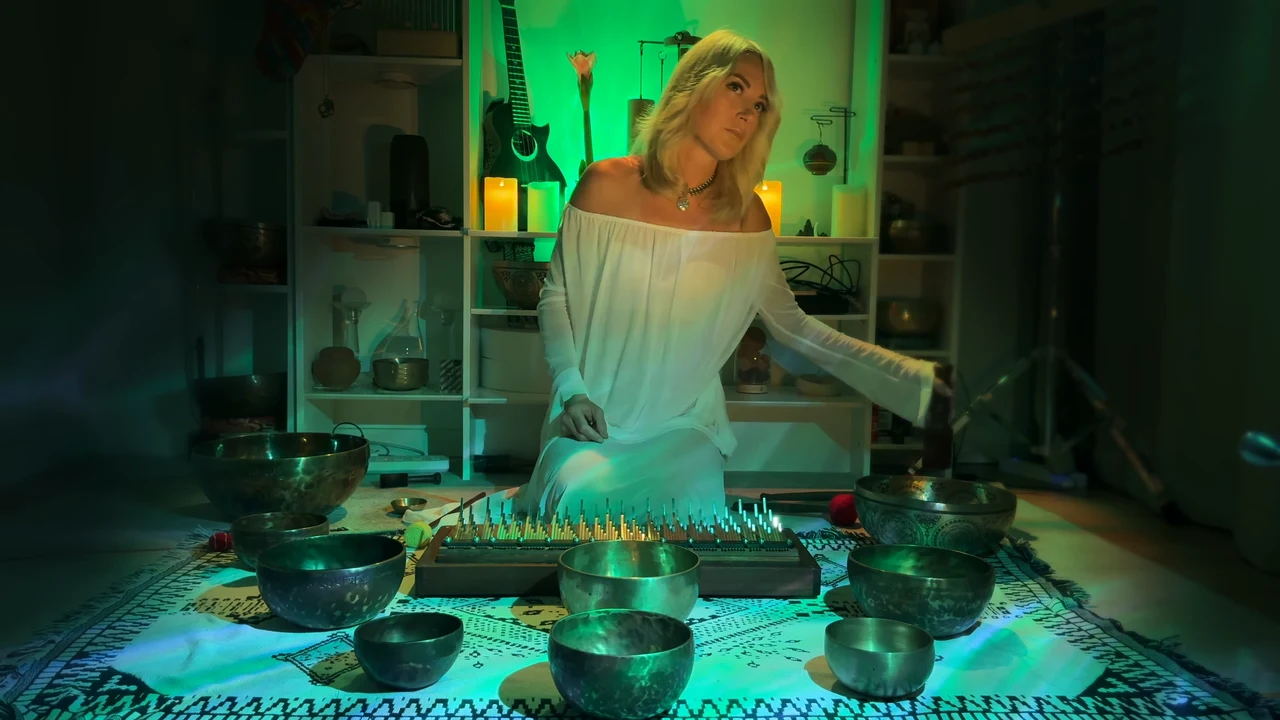
The recording brings together the resonance of Tibetan singing bowls and the plucked notes of the kalimba. Rather than trying to identify every note, listen for the way a sound begins, continues and fades. Which sound catches your attention first? What can you still hear after it begins to soften?
You do not need musical knowledge or a particular belief to explore those questions. They are simply ways of paying attention.
Try a short listening practice
Choose a comfortable seat or a place to lie down, and set a gentle volume before starting. Let yourself adjust your position whenever you need to.
- Begin with one sound. Follow a tone as it fades, without trying to hold your attention perfectly still.
- Notice a change. When a different sound draws you in, let your attention move with it. There is no correct instrument to follow.
- Listen to the whole. Allow the sounds to become one listening space, without naming or analysing each one.
- Finish when you are ready. Pause the recording and leave a brief moment of quiet before moving on.
If your thoughts wander, the next sound offers a place to return. There is no need to force a particular mood or reach an outcome.
A closer look at the kalimba
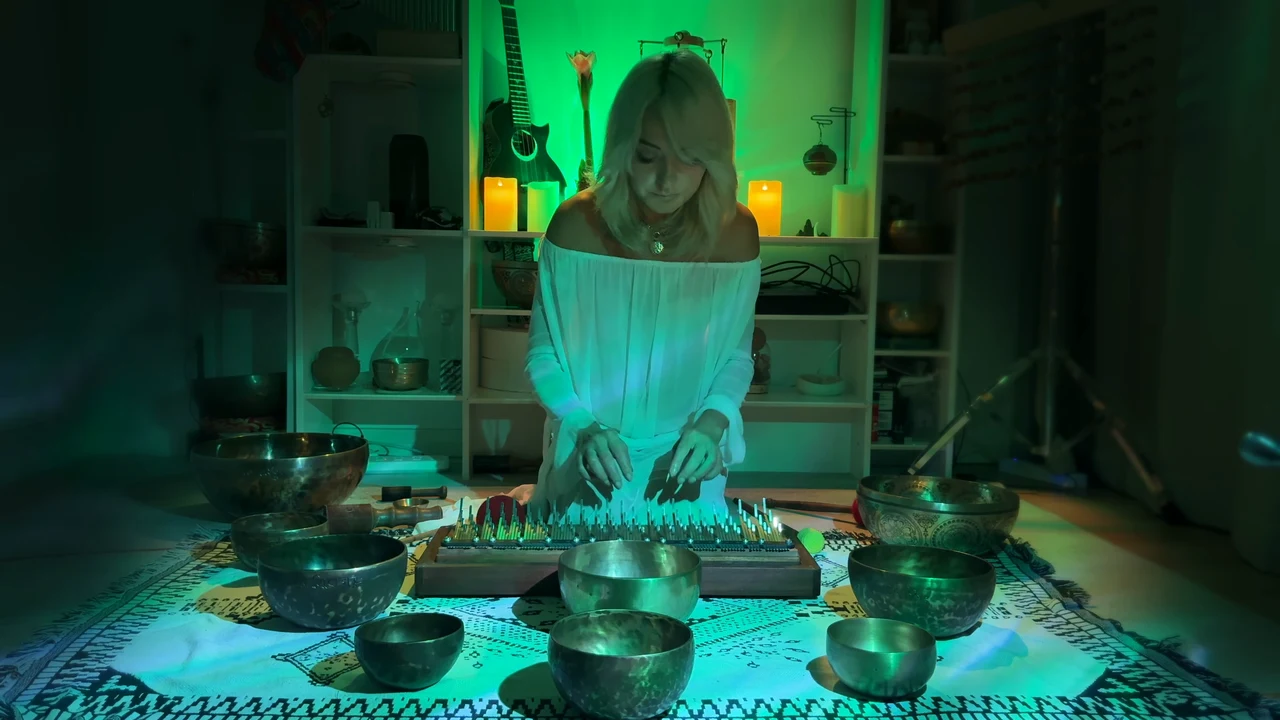
In the frame below, Viktoria’s hands are at the kalimba, with the bowls arranged around her. Watching a short section can be another way to connect a sound with the instrument making it. You can then look away or close your eyes if that feels more comfortable.
Stay for the full session—or a few minutes
Use the player above or watch the Tibetan singing bowls and kalimba session on YouTube. You can return to the recording across several listening breaks; it does not need to be completed in one sitting.
For another session centred on bowls, try the Heart Chakra Sound Bath. If this is your first sound bath, our introduction to sound baths explains how to get started at home.
Questions about listening
What instruments are featured?
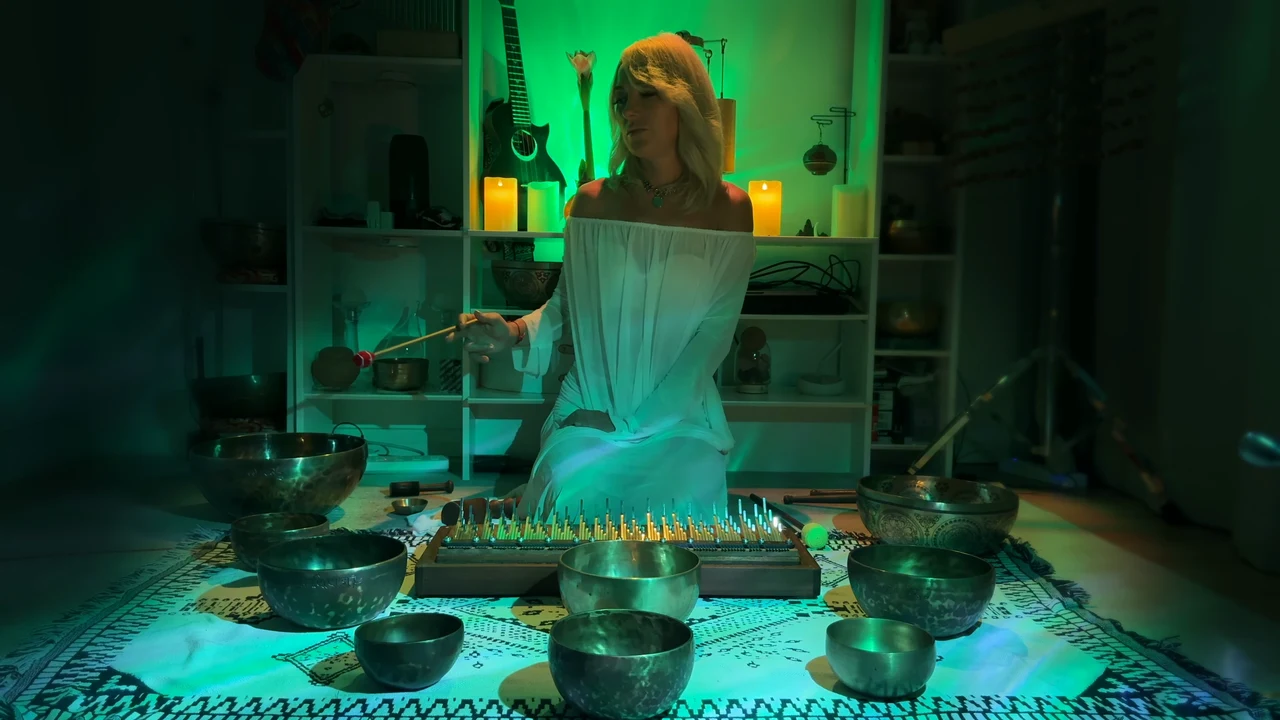
This session pairs Tibetan singing bowls with kalimba. The photographs in this guide are actual frames from the recording.
How long is the recording?
The full recording is approximately 52 minutes. You can choose a shorter listening break and return whenever you like.
Do I need headphones?
Headphones are optional. Use speakers or headphones at a comfortable volume, and choose whichever makes listening easier for you.
Written for relaxation and mindful listening. These guides do not offer medical treatment advice.